
Experiment summary
- Robinson Club’s conversion manager taught Optimizely’s AI the brand voice, page frameworks and the CMS components the team can publish.
- Optimizely reports that landing page and competitor analysis work fell from one or two days to seconds.
- Extra agents check pages, brand voice, factual accuracy, spelling and grammar, with confidence scores that can trigger human review.
- The €4 million revenue figure comes from earlier tests that predate any AI generated pages.
- The case gives no conversion result for an AI built page, no count of live AI assisted tests and no manual control, and Optimizely published it.
Robinson Club taught AI its brand rules and CMS blocks, and says page work fell from days to seconds.
Anyone who has waited two days for a landing page knows how fast a good test idea goes cold. At Robinson Club, a landing page or competitor analysis could take one or two days before a test was ready to move. Its new AI experimentation workflow produces a first usable version in seconds.
The speed claim comes from a customer story published by Optimizely, the software vendor behind the system. The more interesting part is how Robinson fenced the system in, so the output matched the brand, the page structure and the components its content team could publish.
The question for any growth team is simple. Did those fences turn a generic writing assistant into a working part of the testing stack, or did they only make more copy arrive faster?
Generic prompts returned generic pages
Robinson is a resort brand of TUI Group, the European travel company. Its conversion optimisation manager, Michael Richter, runs experimentation across five TUI brands and more than ten European languages, according to Optimizely’s account. Conversion optimisation is the discipline of testing changes to pages so more visitors book.
Richter began by asking Opal, Optimizely’s AI layer, for copy and test ideas. The early results came back too generic, which is what usually happens when a model knows nothing about your business. He then fed it the missing operating context. The context included Robinson’s tone of voice, product details, page frameworks for different jobs, and examples of when to use particular behavioural patterns.
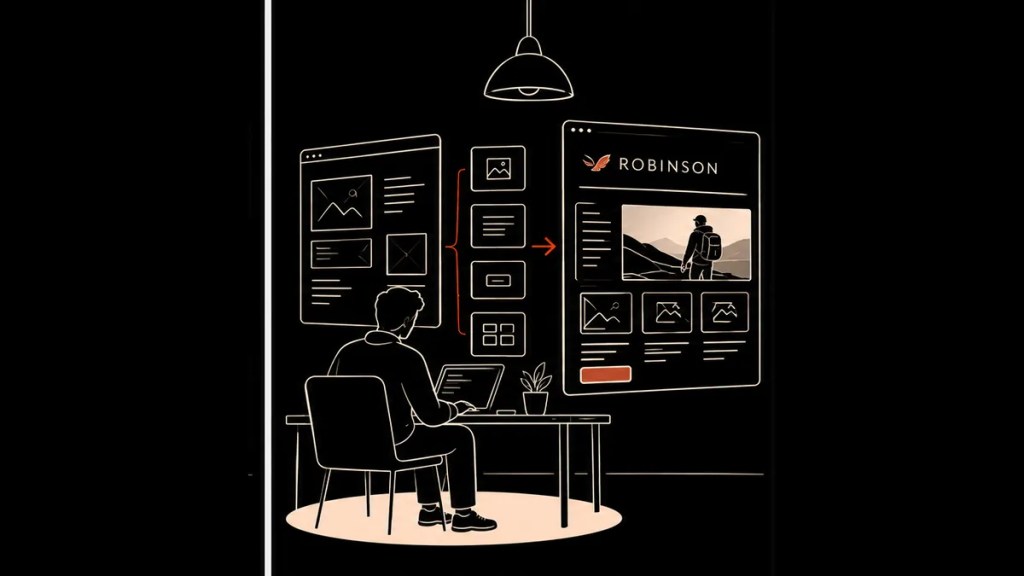
He also taught the system which CMS components existed. A content management system (CMS) is the tool a team uses to publish pages, and its components are the ready made building blocks, such as FAQ sections, lists of selling points and teaser modules. Think of a box of Lego bricks. The model had to build a page from the bricks on the table instead of handing back attractive prose in a blank document.
In a LinkedIn post, Richter described the workflow as growing from simple brand voice copy into complex landing pages, page analysis and competitor benchmarking. The post supports the direction of the work, though it gives no independent performance measure.
The CMS became the fence
Optimizely says the resulting AI landing pages arrive in Robinson’s tone, use an appropriate page framework and are built from components the team owns. Richter told the vendor that the output can be copied directly into the CMS, with an explanation for each decision.
This is the most transferable part of the experiment. The AI needed a clear list of what it was allowed to build, and it received one. The component library acted as a boundary between generation and production. Operators interviewed in our report on when to constrain AI and when to let it fail describe where they draw their lines.
The component library acted as a boundary between generation and production.
The company reported time saving is large. Work that took one or two days now takes seconds. Robinson can also request several page versions for A/B tests, which pit two or more versions of a page against each other on live traffic. Faster production changes experiment velocity, the number of tests a team can launch in a period, although the published account does not say how many of those versions reached a live test.
Without that number, the time saving cannot be assessed across the workflow. If review, legal checks, implementation or traffic allocation stay slow, quick drafts will leave testing speed where it was. A comparable team should time the whole route from brief to launched variant and look beyond the model’s response time. Fyxer’s experimentation workflow places the useful AI work between idea and decision.
Agents checked the agents
Richter also built agents to analyse Robinson pages and competing offers. The vendor says they compare storytelling, visual presentation, search engine optimisation (SEO) and accessibility, then produce summaries and recommendations. Another set audits brand voice, factual accuracy, spelling and grammar.
The reported workflow adds probability or confidence scores to some assessments. It does make uncertainty visible to the editor and creates a place to set review rules, such as requiring a human check below an agreed threshold.
The checks make AI quality control a working part of the growth system instead of an editorial afterthought. The generator produces a page, the checking agents inspect specific failure modes, and a person decides what is safe and useful enough to test. Kuaishou’s A/B Agent shows why outputs need review, since its first two experiments hurt key metrics. Richter describes the output as a starting point that removes heavy lifting, and the final call stays with people.
The revenue number belongs to older tests
Optimizely places the AI work beside more than €4 million in revenue from Robinson’s broader experimentation programme. The chronology limits what can be attributed to AI. The two revenue examples in the case study came from earlier customer research and predate any AI generated pages.
One test made family room types visible even when they were unavailable for a shopper’s selected dates. Optimizely reports €2.5 million in additional revenue while the test ran. Another moved the coupon field from the payment step to the first checkout step and reportedly generated €1.7 million during testing before rolling out to all users.
Those figures show that Robinson runs an established experimentation programme and can tie tests to commercial outcomes. The case study gives no conversion result for an AI generated page, no number of live AI assisted tests, no editing or rejection rate and no manual control group. Nothing in it shows that Opal raised conversion or revenue.
The sourcing leans on the vendor too. Optimizely supplies the software and published the case. Richter’s public post corroborates that Robinson uses the agents for page creation and benchmarking, while the detailed speed and workflow claims still travel through the vendor.
Copy the context pack before the agent
A growth team can test the operating idea without a machine learning group. Pick one repeatable page type and build a small context pack, which is the bundle of material the AI reads before it writes. It holds six ingredients. These are approved brand language, factual product inputs, the page frameworks the team uses, examples of good application, the available CMS blocks and a named review checklist.
Then compare ten manually prepared variants with ten AI assisted variants, and blind the quality review where practical, so reviewers cannot tell which is which. Track working hours, factual defects, brand corrections, the share of drafts that reach launch and the time from brief to live test. Only after that should conversion decide whether the faster workflow creates better experiments.
The same design works with any model or orchestration tool. The transferable part is the constraint layer, made of a bounded source of truth, an output format that mirrors the CMS and separate checks for known failure modes. Switching on an agent without those inputs tests the model’s improvisation. Supplying them tests whether the team can compress reliable preparation work.
Robinson’s evidence supports a narrower conclusion than the €4 million figure suggests. Its AI experimentation workflow appears to have collapsed the time needed to produce a testable starting point. The next proof point is whether that speed survives human review and raises the number of sound experiments reaching customers while their quality holds.
Algolia’s pricing-page experiment offers another case of compressing implementation time while retaining human review. The intervention and reported result differ, so the comparison is about workflow rather than performance.
| Experiment detail | What the reporting shows |
|---|---|
| Change | A conversion manager taught Optimizely’s AI the brand voice, page frameworks and CMS components, then added agents to check the output. |
| Reported result | Optimizely reports page work falling from days to seconds. |
| Evidence | Vendor customer story plus a LinkedIn post from the named Robinson manager. Detailed speed claims come through the vendor. |
| Limits | Vendor published. No conversion result for an AI built page, no count of live AI assisted tests and no manual control were disclosed. The €4M revenue figure comes from earlier tests. |
FAQ
How did Robinson make AI output usable?
After generic prompts returned generic results, Michael Richter fed Opal the brand tone, product details, page frameworks, examples of behavioural patterns and the list of available CMS components, so the model assembled pages from an approved kit.
How much time did Robinson report saving?
Work that took one or two days, such as a landing page or competitor analysis, now takes seconds according to Optimizely’s customer story. The published account does not say how many generated versions reached a live test.
Did the AI pages raise conversion or revenue?
Nothing published shows that. The €4 million revenue figure comes from Robinson’s broader programme, including earlier tests on family room visibility and coupon field placement, and predates AI generated pages.
How can a team test this idea?
Build a context pack for one repeatable page type, then compare ten manually prepared variants with ten AI assisted ones. Track working hours, factual defects, brand corrections, the share reaching launch and time from brief to live test.
Sources
- Optimizely customer story on Robinson Club
- Michael Richter’s practitioner account
- Michael Richter on LinkedIn
- Robinson
Compare the evidence and operating lessons from more AI experiments in our Growth Signal Index, or browse benchmark tooling in the Industry Contents Lab.